
You didn’t expect a story about Belgrade hooligan culture? I get it. When people talk about Belgrade, they usually start with the food, the nightlife, or the rivers. But there’s another side to the city that beats like a drum and colors the daily lives of its residents: the fan chants in stadiums, the graffiti, the rivalries, and a deep, fierce passion for sports. This is what makes Belgrade’s hooligan culture not just about football matches, but about identity, tradition, and community.
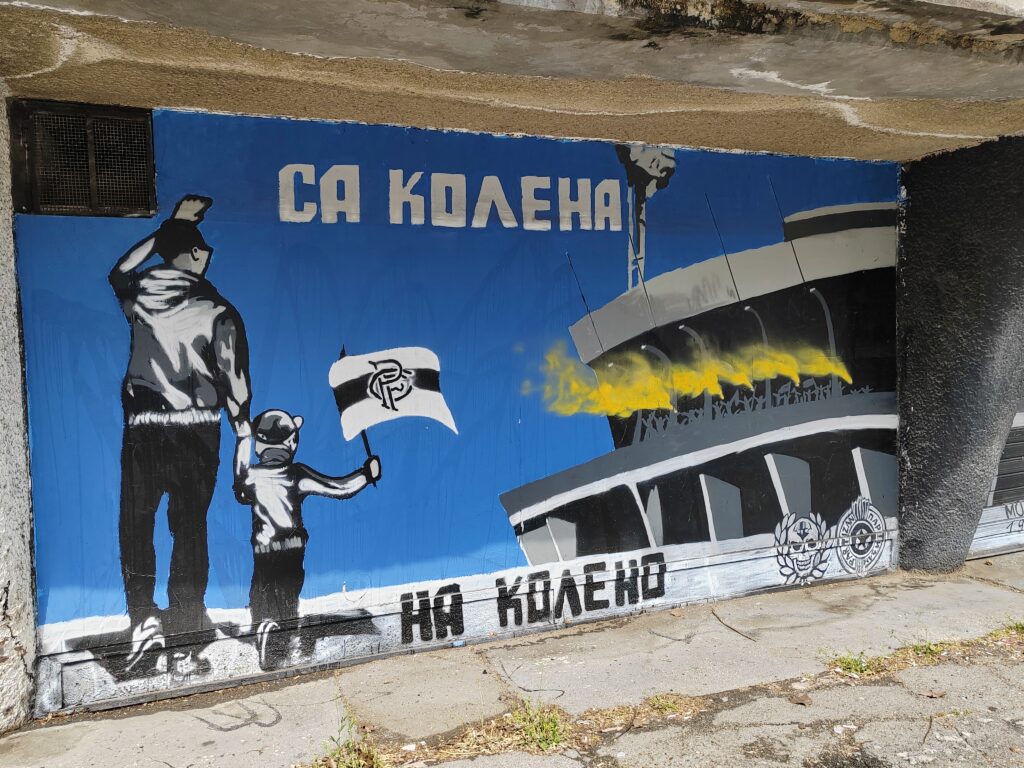
Riding an electric scooter through the city, you get a close-up view of this culture. Streets covered in black-and-white or red-and-white graffiti tell stories of fierce loyalty. Murals of legendary players pop up on old concrete walls, like modern-day shrines. You don’t have to be a sports fanatic to feel the energy, just let the streets guide you. Or book a tour right now.
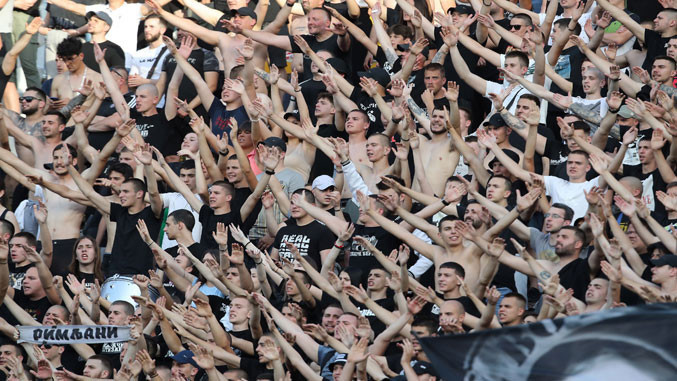
The rivalry between Partizan and Red Star Belgrade is one of the most intense in the world. Locals call it the Večiti derbi (the Eternal Derby), and it’s more than just a game. It’s weeks of preparation, neighborhoods filled with chants, flags hanging from balconies, and cafes buzzing with debates about who will dominate on the field. On match day, the entire city changes. Even people who don’t normally watch football gather around TVs in small bakeries, smoky bars, or in front of giant video walls set up in public squares.
Belgrade hooligan culture is rooted here. It’s a performance of loyalty, a show of who you belong to. Chants echo through the stadium as thousands of voices merge into a single roar. Pyrotechnics light up the sky. And when the final whistle blows, the celebrations spill into the streets. Cars honk, people wave flags, and strangers hug like old friends. For better or worse, this is Belgrade in its most raw, honest form.
It’s not all about the big derbies. Walk through Belgrade on any given day of the week and you’ll see signs of this culture. It seems like every corner has a graffito or a mural dedicated to a club legend. Kids grow up learning chants before they can even spell their favorite players’ names. Taxi drivers will ask you, “Zvezda or Partizan?” as if it’s the most natural way to start a conversation.
This passion goes beyond football. Basketball, water polo, volleyball—Serbia’s national teams regularly bring home medals, and when they do, Belgrade knows how to celebrate. Republic Square fills with thousands of fans waving flags, lighting flares, and singing until dawn. Sports here are a universal language that bridges generations. And hooligan culture, though often controversial, is one of its loudest expressions.
A “Belgrade Hooligans” tour isn’t about glorifying violence, but about understanding a culture that has shaped the city’s identity. Riding an electric scooter allows you to cover more ground than walking, while still staying close enough to feel the street vibe. You’ll pass by both the Partizan and Red Star stadiums, stop at murals that tell the history of past victories, and hear stories you won’t find in any tourist guide.
Your guide will explain how fan groups were formed, what role they play in society, and why they’re so important to ordinary people. You’ll see where the most famous clashes took place, but also the spots where fans gather for community work, charity drives, and building support networks.
It’s an eye-opening experience that shows Belgrade through a lens tourists rarely get. By the time you park your scooter at the end of the tour, you’ll understand why sports are the heart of this city.
What makes Belgrade special is how this culture spills from sports into daily rituals. On match days, entire neighborhoods feel like open-air living rooms. Cafes set up projectors on their terraces, corner shops put small TVs in their windows so people can watch while buying bread, and groups of friends gather in garages or on balconies with homemade barbecues, turning a football game into a neighborhood festival.
When Serbia wins an important match, the city explodes. Tens of thousands gather in the streets, waving flags, singing folk songs mixed with stadium chants, and celebrating until the early morning hours. Whether they are welcoming Novak Đoković after a Grand Slam win or cheering for the national basketball team, Belgrade knows how to make its athletes feel like heroes.
That’s why exploring Belgrade’s hooligan culture isn’t just about football violence or rivalries—it’s about witnessing how deeply sports are woven into the city’s soul.
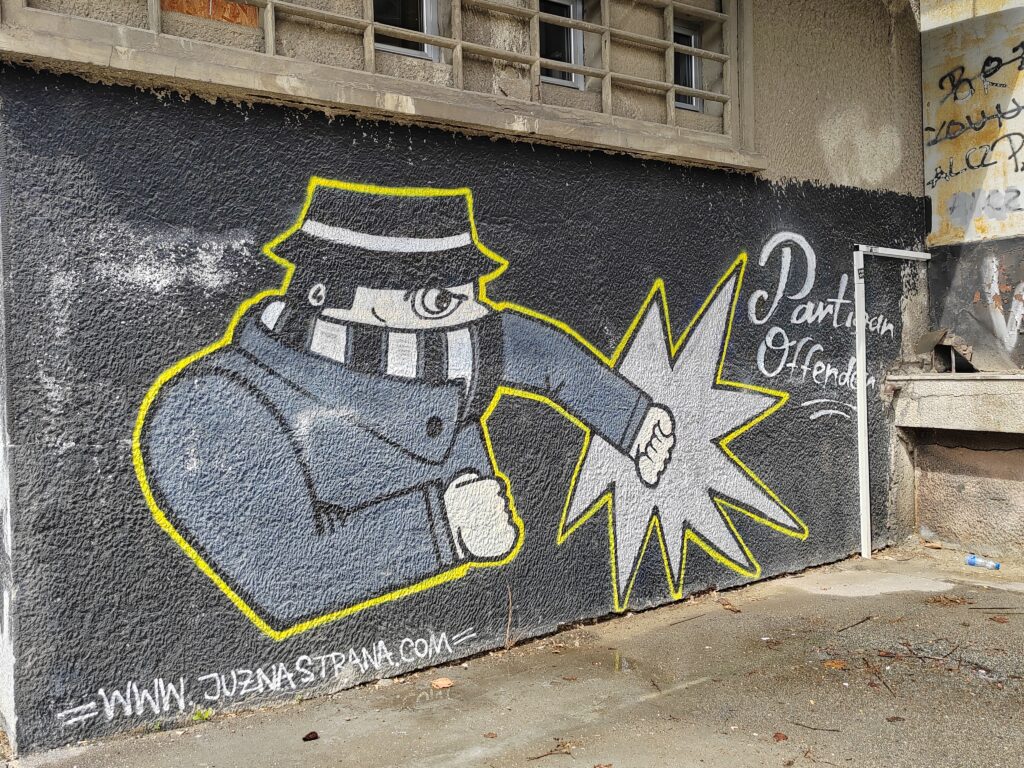
You don’t have to be a football fan to appreciate this side of Belgrade. It’s about the people, the sense of belonging, the stories written on concrete walls and sung from packed stands. The “Belgrade Hooligans” tour gives you a chance to connect with that energy, to ride through a living, breathing historical record.
When you leave, you won’t just remember the rivers, the food, and the nightlife. You’ll carry with you the echoes of chants, the sight of murals glowing in the evening sun, and the feeling of a city that celebrates, grieves, and unites through sports.
To experience Belgrade and the rest of Serbia on the next level, visit Serbian Insiders and book a tour that will let you explore the country like never before.